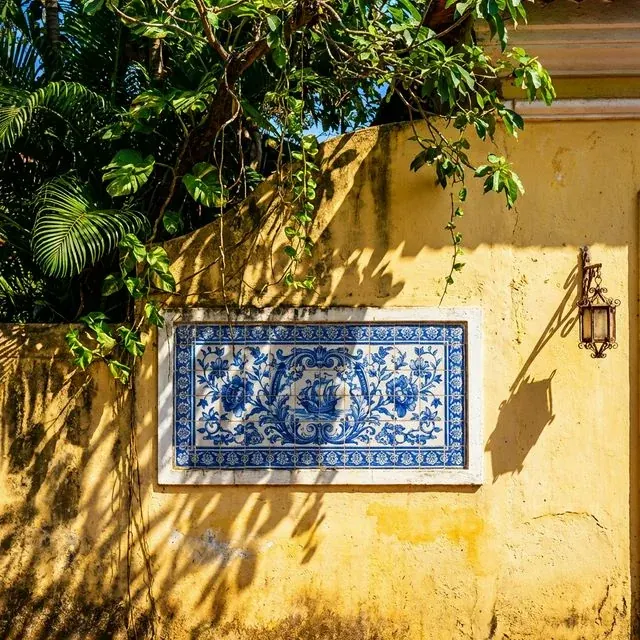
Azulejo tiles are hand-painted tin-glazed ceramic tiles that the Portuguese brought to Goa in the 16th century. Originally inspired by Moorish geometric art, Azulejos became the defining visual language of Portuguese architecture — and nowhere outside Lisbon are they more beautifully preserved than in the churches, mansions, and Latin Quarter streets of Goa.
The Origins: From Arab Geometry to Portuguese Art
The word "Azulejo" derives from the Arabic az-zulayj, meaning "polished stone." When the Moors ruled the Iberian Peninsula (711–1492 CE), they brought with them a tradition of geometric ceramic tilework that decorated mosques, palaces, and bathhouses. The Portuguese, after reclaiming their territory, didn't destroy this art — they absorbed it.
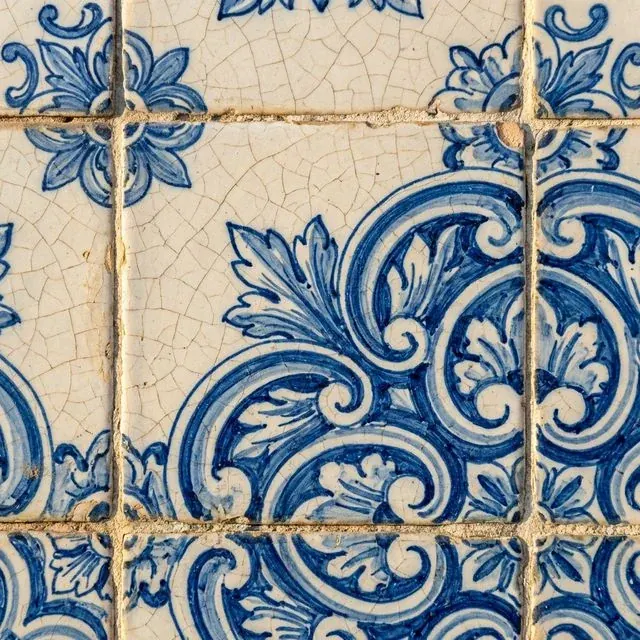
By the 15th century, Portuguese potters had evolved the Moorish geometric style into something entirely new. They introduced figurative painting — saints, ships, flowers, and mythological scenes — all rendered in the distinctive cobalt blue on white that we now associate with Azulejo art. This blue pigment, cobalt oxide, was prized because it was the only pigment that could survive the extreme temperatures of kiln firing without changing colour.
How Azulejos Came to Goa
When Afonso de Albuquerque captured Goa in 1510, a massive programme of church and monastery construction began. Portuguese missionaries and architects brought the Azulejo tradition with them, initially importing tiles directly from Lisbon and later training local Goan craftsmen in the technique.
The earliest Azulejo tiles in Goa date to the late 16th century. You can still see original panels in:
- Se Cathedral, Old Goa — the largest church in Asia, with blue-and-white panels depicting scenes from the life of St. Catherine
- Basilica of Bom Jesus — housing the mortal remains of St. Francis Xavier, with Azulejo borders framing the interior
- Church of St. Francis of Assisi — extensive tile panels covering entire walls with biblical narratives
- Fontainhas, Panaji — the Latin Quarter, where 18th and 19th century mansions display Indo-Portuguese Azulejo facades
What Makes Goan Azulejos Different?
Over 500 years, Goan artisans didn't simply copy Portuguese designs — they evolved them. Goan Azulejos developed distinct characteristics:
1. Indo-Portuguese Fusion Motifs
Tropical flowers like frangipani and hibiscus replaced European roses. Coconut palms appeared alongside Portuguese ships. Hindu temple geometry influenced border patterns. The result is a unique visual language that exists nowhere else in the world — neither fully Portuguese nor fully Indian, but distinctly Goan.
2. The Galo de Barcelos
The Portuguese rooster (Galo de Barcelos) became one of Goa's most beloved symbols. Based on a medieval Portuguese legend about a falsely accused pilgrim who was saved when a roasted rooster stood up and crowed, the Galo represents faith, justice, and good fortune. In Goa, you'll find it painted on tiles, carved into wooden furniture, and displayed as a symbol of Goan-Portuguese cultural pride.
3. Local Earthenware
While early tiles were imported, Goan potters eventually began using local red laterite clay, which gave a slightly different warmth to the fired tile body. The glaze technique, however, remained faithful to the Portuguese original — tin glaze applied over bisque-fired earthenware, then hand-painted with cobalt oxide and fired again at high temperature.
The Science Behind 500-Year Durability
How do 500-year-old tiles still look pristine? The answer lies in chemistry. When cobalt oxide is painted onto a tin-glazed surface and fired at 1,200°C, the pigment literally fuses into the glass matrix of the glaze. It becomes part of the ceramic itself — it cannot peel, flake, or wash off. The vitrified surface has near-zero water absorption, making it impervious to monsoon rain, tropical humidity, and coastal salt air.
This is why AzulejosGoa ceramic nameplates use the same materials and firing temperatures — we're not creating a product, we're continuing a 500-year tradition.
"The tile is not a decoration applied to a building. It is the building's skin — alive, breathing, and permanent."
Azulejos Today: A Living Tradition
Azulejo art in Goa is not a museum relic — it's a living, practised craft. At AzulejosGoa, we hand-paint every tile using the same cobalt oxide pigments, the same tin-glaze technique, and the same double-firing process that Portuguese masters used five centuries ago. The only difference is that today, instead of decorating church walls, our tiles become personalised nameplates and gifts that hang on homes across India.
Every nameplate we create carries this 500-year lineage. When you commission an Azulejo tile, you're not buying a product — you're acquiring a piece of living art, made with the same hands, materials, and devotion that built Goa's most beautiful churches.
Want to understand the full process? Read our complete guide: How Azulejo Tiles Are Made.