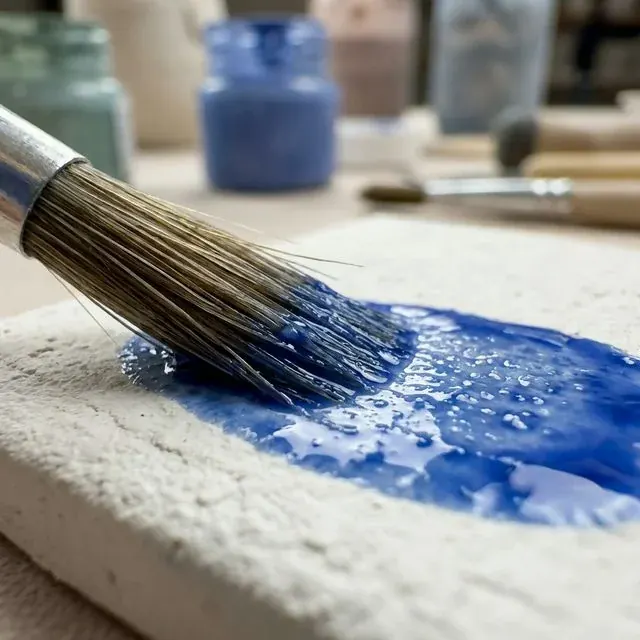
The key difference between hand-painted and printed ceramic nameplates is permanence. Hand-painted tiles use cobalt oxide pigments fused into the ceramic body at 1,200°C — the colour is part of the tile and cannot fade. Printed tiles use surface-applied digital inks or decals that sit on top of the glaze, which can degrade with UV light and moisture over time.
Side-by-Side Comparison
| Feature | Hand-Painted | Digitally Printed |
|---|---|---|
| Pigment type | Cobalt oxide (fused into glaze) | Digital ceramic ink (surface-applied) |
| Firing temperature | 1,200°C (double-fired) | 800–900°C (single-fired) |
| Fade resistance | Permanent — pigment is part of tile | May fade after 5–10 years in UV |
| Water resistance | Near-zero porosity | Good, but glaze layer varies |
| Uniqueness | No two tiles identical | Machine-reproducible |
| Production time | 8–40 hours per tile | 5–10 minutes per tile |
| Price range | ₹2,800–₹9,000+ | ₹300–₹1,500 |
| Colour depth | Rich, luminous, 3D brushwork | Flat, uniform, photographic |
| Texture | Visible brush strokes, impasto layers | Smooth, machine-even surface |
| Heritage | 500-year Azulejo tradition | Modern industrial process |
Why the Price Difference?
A printed nameplate costs ₹300–₹1,500. A hand-painted AzulejosGoa nameplate starts at ₹2,800. Why?
The honest answer: time. A printed nameplate takes a machine 5 minutes. A hand-painted nameplate takes an artist 8 to 40 hours — designing, drawing with compass and rule, mixing cobalt oxide, applying each brushstroke by hand, then firing twice in a kiln at temperatures that would melt steel.
The price isn't higher because we want it to be. It's higher because the process genuinely takes that long. There's no shortcut to painting by hand, and there's no shortcut to firing at 1,200°C.
How to Tell If It's Hand-Painted
Not sure if a nameplate is genuinely hand-painted? Here's what to look for:
- Brush strokes visible under magnification — hand-painted tiles show individual brush marks, varying thickness, and subtle imperfections. Printed tiles have uniform dot patterns (like a newspaper photo).
- Slight colour variation — cobalt oxide interacts differently with the glaze in different areas, creating natural depth and luminosity. Printed tiles have perfectly uniform colour.
- Raised glaze texture — where the artist applies multiple layers, you can feel slight ridges. Printed surfaces are flat.
- Backside clarity — hand-painted tiles show bare bisque clay on the back. Some printed tiles are applied to imported blanks with manufacturer stamps.
When Printed Makes Sense
We're artisans, not salespeople. Here's the honest truth: if you need 50 identical tiles for a renovation project, digital printing is the right choice. It's faster, cheaper, and produces consistent results at scale. There's nothing wrong with printed tiles for bulk architectural work.
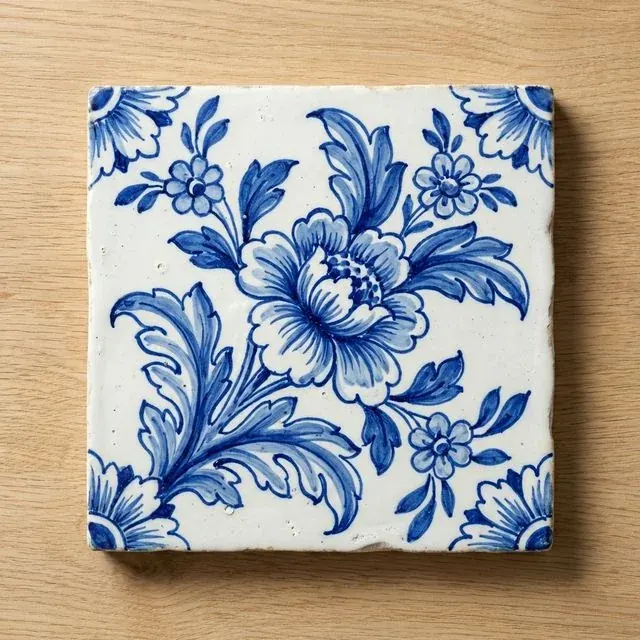
But if you want one nameplate that's uniquely yours — with your family name painted by a human hand using the same pigments that decorated Goa's 500-year-old churches — then hand-painted is the only option. It's the difference between a poster and an oil painting.
Which Should You Choose?
Choose hand-painted if: You value uniqueness, permanence, and artisan heritage. You want a nameplate that will outlast you. You appreciate visible brushwork and the knowledge that a human artist spent hours on your piece.
Choose printed if: You need multiple identical tiles. Budget is the primary concern. You don't mind machine-produced uniformity.
Ready to see the hand-painting process? Read: How Azulejo Tiles Are Made.